Chimney stacks are the most exposed part of any roof — and in York's North Yorkshire weather, they take a battering. We handle all chimney work from flashing repairs to full stack rebuilds, using proper lime mortar and correctly specified lead.
Not every roof issue is a chimney repairs job. Here are the signs that this is the right fix:
When chimney repairs is NOT the answer: If the chimney is sound and the only issue is a disused flue, a ventilated cowl (£60–£150) prevents rain entry without any repair work.
Ladder, scaffold, or drone inspection. We photograph every issue and check surrounding areas.
Itemised: scaffold, materials, labour, waste. Fixed total, valid 30 days.
Sheeted below, completed to specification, photographed. Any unexpected findings discussed before proceeding.
Site cleared, gutters checked, 10-year workmanship guarantee handed over in writing.
| Job | Duration |
|---|---|
| Flashing replacement | Half–full day |
| Repointing (standard stack) | 1–2 days |
| Haunching renewal | Half day |
| Pot replacement | Half day |
| Partial rebuild (top courses) | 2–3 days |
| Full stack rebuild | 3–5 days |
| Cowl installation | 1 hour |
Lime mortar pointing needs above 5 degrees and no frost for 48 hours to cure. Lead dressing runs in most conditions.
Almost all chimney work needs scaffold — chimneys are at the highest point of the roof. Scaffold is included in every quote.
Jobs that typically need scaffold: all chimney work — working at chimney height without scaffold is unsafe and produces poor results. Scaffold is always a line item in the quote. On tight streets in South Bank and Heworth, pavement licences through City of York Council are arranged by us.
| Job | Typical Range | Notes |
|---|---|---|
| Cowl installation (per pot) | £60–£150 | 1 hour |
| Haunching renewal | £150–£300 | Half day |
| Lead flashing replacement | £200–£450 | Half–full day |
| Repointing (standard stack) | £300–£600 | 1–2 days |
| Partial rebuild (top courses) | £600–£1,200 | 2–3 days |
| Full stack rebuild | £1,500–£3,000 | 3–5 days |
| Stack removal (redundant) | £1,000–£2,500 | 2–4 days |
Full repoint and flashing replacement on a Victorian terrace chimney on East Parade, Heworth: NHL 3.5 lime mortar repointing to all four faces, new Code 4 stepped and apron flashings, haunching renewed. Scaffold to chimney height. Total: £780 plus VAT. Duration: 2 days.
No deposit on chimney repairs under £500. Larger jobs: staged payments.
10-year workmanship guarantee on all chimney repairs. Lime mortar repointing typically lasts 25–40 years. Code 4 lead flashings last 40–60 years in York conditions. Haunching renewal lasts 15–25 years.
Summary: workmanship failure = we fix it free for 10 years. Storm or impact damage = buildings insurance. Materials carry manufacturer warranties on top.
Chimney work involves some noise (pointing, cutting chases for lead) and dust. We sheet below the work area. Chimney debris is caught, not dropped. You don't need to be home but should know that loft access may be needed for internal inspection.
Lime mortar needs above 5 degrees and no frost for 48 hours. Lead work runs in most conditions. Winter chimney work is possible but mortar pointing may need to wait for a suitable temperature window.
Every chimney job starts with a close inspection — either from scaffold or using a telescopic camera. In York, the most common issues we find are eroded pointing on Victorian stacks in areas like South Bank, cracked cement haunching on post-war properties, and failed lead flashings on all eras. We photograph everything and explain what needs doing and why before quoting.
If the brickwork is sound but the mortar joints have eroded, repointing is the answer. If bricks are spalling, the stack is leaning, or there's structural cracking, a partial or full rebuild is needed. In York, we see a lot of chimney stacks where previous repairs used hard cement mortar on soft Victorian bricks — this traps moisture and accelerates decay. We always use NHL lime mortar on pre-1930s properties.
North Yorkshire's temperature swings — freezing overnight to mild by midday in spring and autumn — put extreme stress on lead flashings. The expansion and contraction cycle causes fatigue cracks, particularly on south-facing chimneys. We dress all flashings to Code 4 minimum and use proper stepped joints into the masonry to accommodate thermal movement.
Chimney stacks are the most exposed part of any roof — they project above the roofline into unobstructed wind, rain, and frost. In York, this exposure is compounded by the flat Vale of York topography that offers no wind shelter, and the 55+ annual frost days that subject mortar and flashings to relentless freeze-thaw cycling. A chimney stack in York works harder than the same stack in a sheltered southern location — and it shows.
The most common chimney issue we see across York is eroded pointing. On pre-1930s properties — and there are thousands across South Bank, Heworth, Holgate, and the city centre — the original lime mortar pointing has fully weathered after 90–140 years of exposure. Open joints allow wind-driven rain into the chimney breast, causing damp patches on internal walls and accelerating freeze-thaw damage to the brickwork itself. Repointing with lime mortar is essential — cement mortar on old soft brick causes spalling and decay that is far more expensive to repair than the pointing itself.
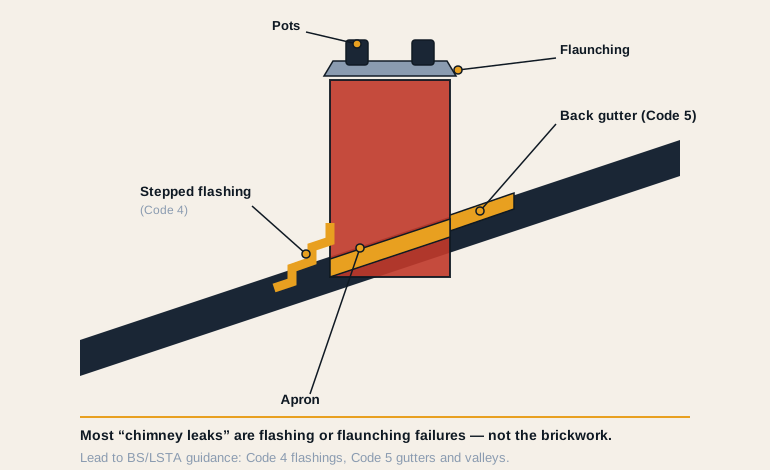
The second most common issue is lead flashing failure. Every chimney meets the roof slope via lead flashings — stepped cover flashings on the sides and a back gutter at the rear. These lead sections expand and contract with every temperature cycle, eventually fatiguing and cracking. In York's climate, lead flashings typically last 30–50 years depending on exposure, code weight, and quality of original dressing. When they fail, water enters the junction between chimney and roof — one of the most common leak locations on any property.
Free quotes, no call-out fees, honest advice from a local team.
📞 Call Now: 0190 459 3302"Called on a Tuesday after tiles blew off our Victorian terrace on East Parade. They were with us by lunchtime, made everything safe, and had the permanent repair done by Thursday. Proper job, honest price."
"Had three quotes for a full re-roof on our 1930s semi on Carr Lane. These lads were competitive, explained everything clearly, and the work was first class. New tiles look brilliant."
"Tricky chimney flashing job on our terrace on Nunthorpe Road that two other roofers turned down. York Roofing sorted it properly — used lime mortar on the repointing too. Top work."
Repointing a standard chimney stack in York costs £300–£600 depending on height and access. If the stack needs partial rebuilding, costs range from £600–£1,200. Lead flashing replacement is typically £200–£450. We include scaffold in all quotes.
Warning signs include leaning stack, cracked bricks, missing mortar, loose or missing pots, and water staining on the breast inside the house. If you see any of these, get it inspected promptly. A failing chimney stack can collapse in high winds — this is a genuine safety risk.
On all pre-1930s properties, yes. Natural hydraulic lime (NHL 3.5) mortar allows the masonry to breathe and accommodates slight movement without cracking. Cement mortar on old brickwork is one of the most common causes of accelerated chimney decay in York — and one we fix regularly.
Yes. If the chimney is no longer in use, capping with a ventilated cowl prevents rain entry while allowing airflow to prevent condensation. If you want to remove the stack entirely, we take it down to below roofline and tile over. Both options eliminate ongoing maintenance costs.
Repointing typically takes 1–2 days. Lead flashing replacement is usually a half-day to full day. Full stack rebuilds take 2–3 days. Weather can affect lime mortar work — it needs above-5°C temperatures to cure properly.
The cement or mortar cap at the top of the chimney stack that holds the pots in place and sheds water. It's one of the most exposed surfaces on any property. In York, cracked haunching is extremely common on post-war properties and is a frequent cause of water ingress.
Almost always, yes. Working at chimney height without scaffold is unsafe and produces poor results. Scaffold is included in all our quotes. For some inspection work, we can use a telescopic camera from the ground to assess before committing to scaffold costs.
No call-out fees. No obligation. Just an honest quote from a local York roofer who'll turn up when they say they will.
0190 459 3302 ✉ Email Us Instead